
Simulation of meandered line inductor
simulation on HFSS is wrong. Can anyone help me with this problem?
thx a lot !
I think the inductance and Q are much larger than the one simulated with Sonnet.
Even I simulate an inductor following the instruction of HFSS because of the single ended inductor have a long distance between the two port which means a long pec layer is added in the calculation.
if you try to put the to port in the same side then you will see the difference.
Right now I also don't know how to correctly deembed this problem。
Hello,
Yes...The Sonnet Results are OK...I verified your results with AWR MWO (EMSight) and MEMS Reasarch EM3DS...
I have attached the results, for your reference...
Also I simulated your sonnet example in AWR MWO, using the unique EMSocket feature to lauch sonnet & EM3DS in MWO & compared all the results in one graph...
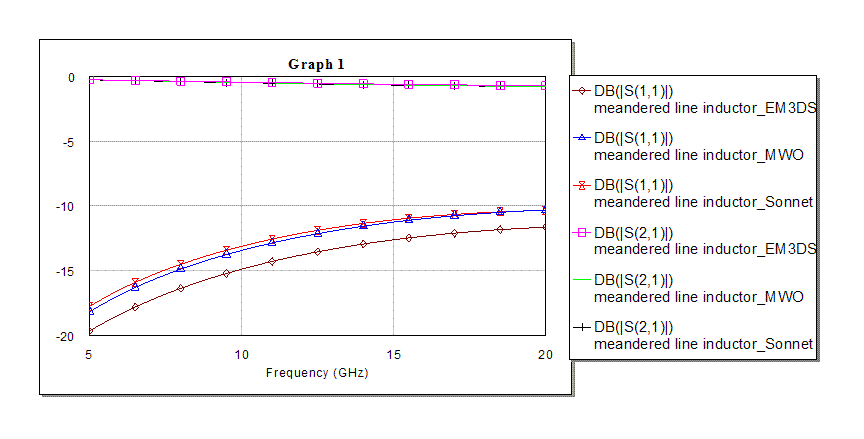
I don"t have HFSS to verify...Hence no comments...
---manju---
Hi,
just wondering: Looking at the AWR geometry, the "width" of the substrate is much smaller then the hight. Therefore the GND is pretty far away from the meander. How is the nearby boundary (left and right from the meander) handeled in Sonnet and EMSight. "Open" or "electric"? Since both programs are MoM codes, they might(?) not care about the small substrate size. HFSS is a FEM code at it DOES care if the calcualtion box is to small. Maybe this explains the difference.
F.
thanks a lot to all of u above, wut u said are really making sense, although i still
can't simulate accurately on hfss. anyway thinks :)