
GDT in lightning arrestor
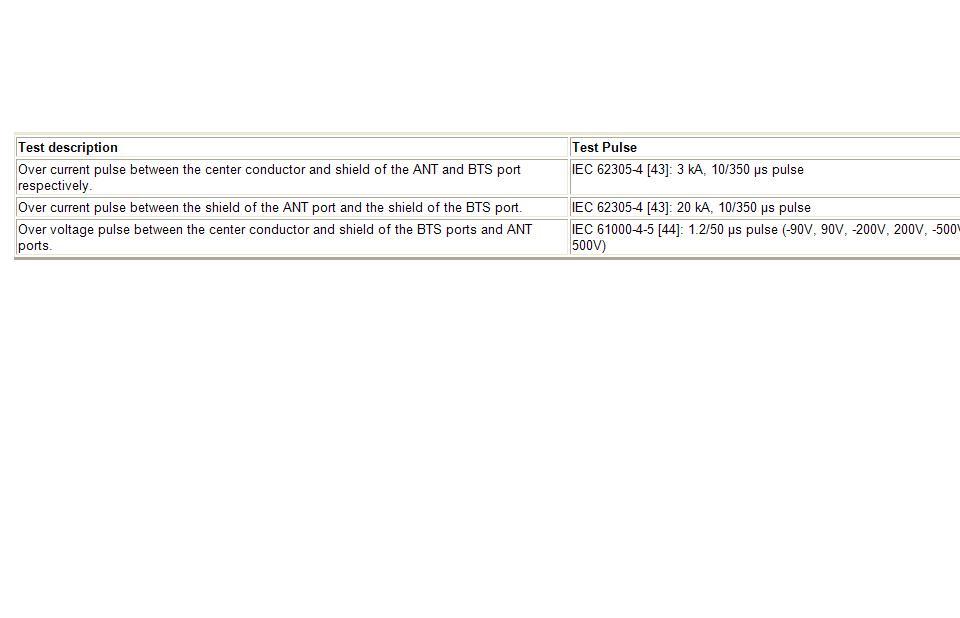
what is meant by 10/350usec test pulse with 20kA
what are sources for these GDTs?
What is GDT?
Gas Discharge Tube
c.p. claire has gdts.
hi,
GDT is Gas discharge tube, it comes with different current ratings.....
10KA, 20KA,............................ 200KA. where the test pulse will be have the timing 1.2/50 usec, 8/20 usec, 10/350 usec......
what does this test pulse with 8/20usec mean?
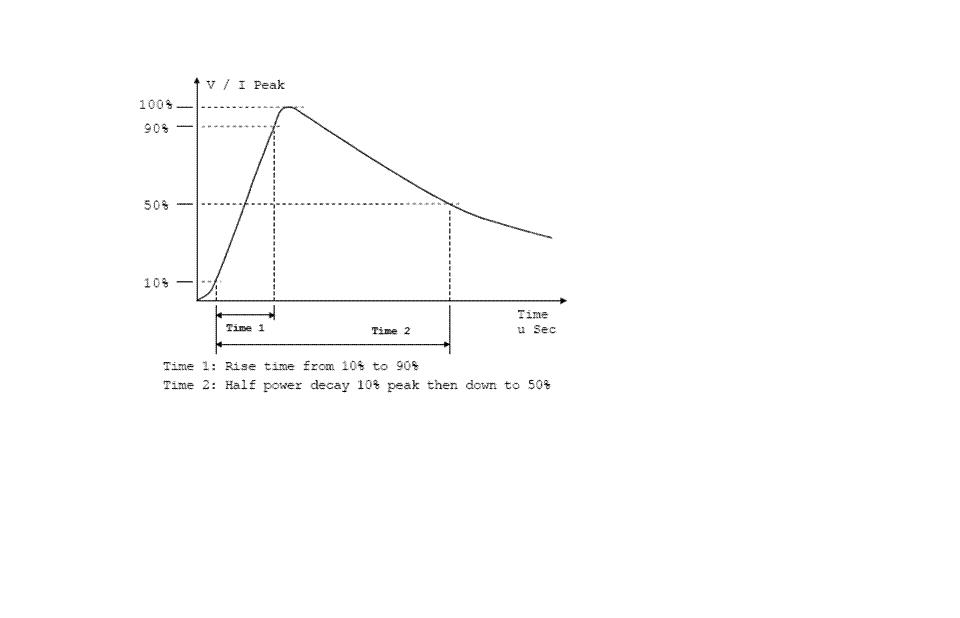
You have shown the pulse definition in your original post. What's unclear with it?
The two time values are the time on the leading edge from zero to max and the second time value is the fall time from peak to near zero applied excitation.
As a bit of additional information, these gas tubes have a slow reaction time but high power dissipation. In critical applications, they are followed by a series impedance and a shunt semiconductor element that reacts faster but has less power or energy dissipation.
hi,
It means 8/20usec is rise time/fall time.
If a GDT with 10/1000 usec can be used for 10/350 usec pulse (current rating is 20KA)?
fall time should be more or less? how it should be?
thank you
It's not clear to me, what you are actually asking for? The exact definition of the test pulses is a problem of standardization,
but it doesn't matter much for overvoltage protection practice.
I've seen slightly different definitions in literature (I don't have the standards at reach). The first timing value is clearly
a 10/90% risetime, as shown in the diagram in your above post. For the second (pulsewidth), I've found e.g. rising 50%
to falling 50%, rising 10% to falling 50% as above or 0 to falling 50%. As along as the pulse width is considerably larger than
the rise time, the differences are neglectible.