
[HFSS] How may I calculate the magnetic field being coupled through a defined surface
It's actually the same simulation I was running in a previous question:
https://www.edaboard.com/thread327356.html
The magnetic field is being coupled from the Red CPW line to the square within the Blue CPW line, with the below setup:

Using the plot field feature to give the mag and vector plot of the field through a define non-model square overlapping the hollow in the blue CPW line, I am able to visualize the field and strength, which both looked pretty good.
To extract the number, I tried to use the field calculator:
In Tabs, HFSS-->Field-->Calculator
But then in that I found a lot of expressions, I tried a few of them intuitively like:
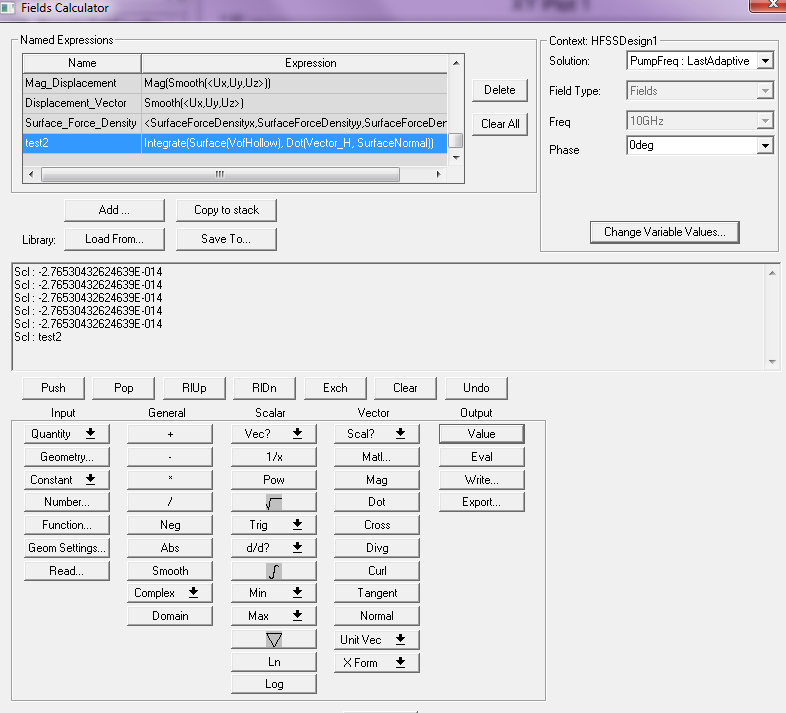
However I cannot really tell if that's correct, much appreciated if you don't mind correcting me or sharing with me how this maybe done.
Hi sandbo,
It looks to me that your definition is correct. I think you're just looking for the magnetic flux through the surface, so it's a fairly straightforward calculation.
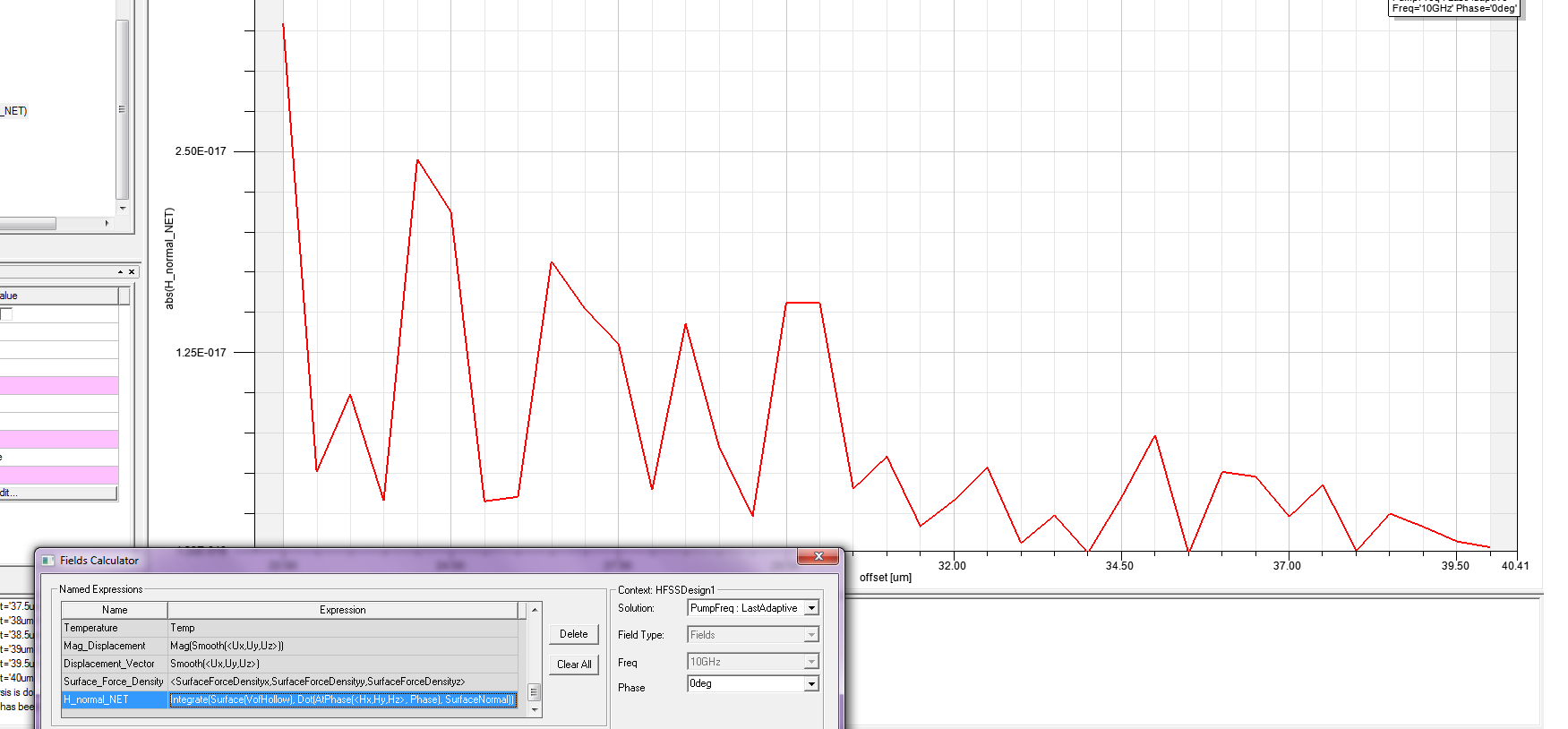
Thanks a lot, in fact I am getting numbers pretty close to the expected, however the thing bothered me is when I tried to plot the flux normal to the square, I get fluctuating values, instead of the exponential decay of field I expected.
However from the vector plot, I do see the arrow decreasing with distance of the hollow area from the center Red CPW line.
I am pretty frustrated, though I am not quite confident with the expression, in which I call the surface, take a dot product of the vec_H with the normal to that surface, and then integrate the dot product over that surface, I am getting a fluctuation like below, while I expected an exponential decay, much appreciated if any ideas can be provided.
- FREE electromagnetic simulators, rather than commercial ones
- Checkerboard shaped Artificial Magnetic Conductor array in HFSS or CST - Get RCS
- Re: FREE electromagnetic simulators, rather than commercial ones
- electromagnetic emission from local and global grid
- Need references about numerical electromagnetic !
- Electromagnetic Field Vs Waves