
SI-list表面粗糙度( surface roughness) 详解(三)表面粗糙度的仿真.
SI-list【中国】表面粗糙度( surface roughness) 详解(三)表面粗糙度的仿真
2016-05-10 SI-list【中国】 shark4685
本文大纲
1. 表面粗糙度( surface roughness)介绍.
2. 表面粗糙度Model的建立.
3. 表面粗糙度( surface roughness)的仿真.
4.仿真与测试的比对,Which roughness model is better?
关与Suface roughness
铜箔表面粗糙度是指铜箔表面具有的较小间距和微小峰谷的不平度。铜箔表面粗糙度越小,则表面越光滑,反之相反。表面粗糙度与机械零件的配合性质、耐磨性、疲劳强度、接触刚度、振动和噪声等有密切关系。表面粗糙度起因于材料加工过程

Roughness simulation
1.Roughness model in SIwave
1.1 [Edit] \ [Layer Stack]
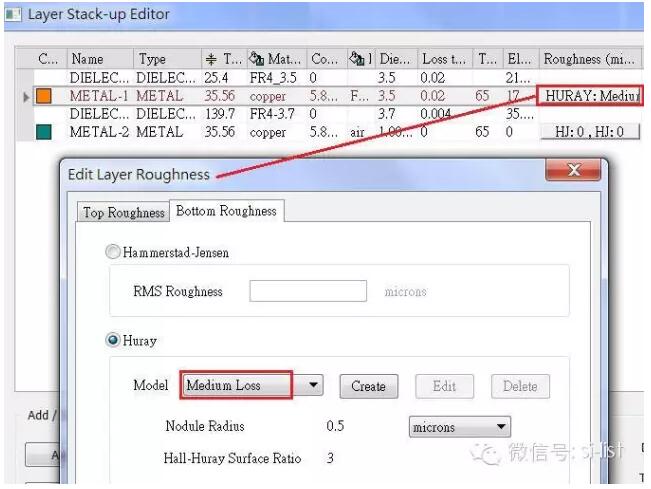
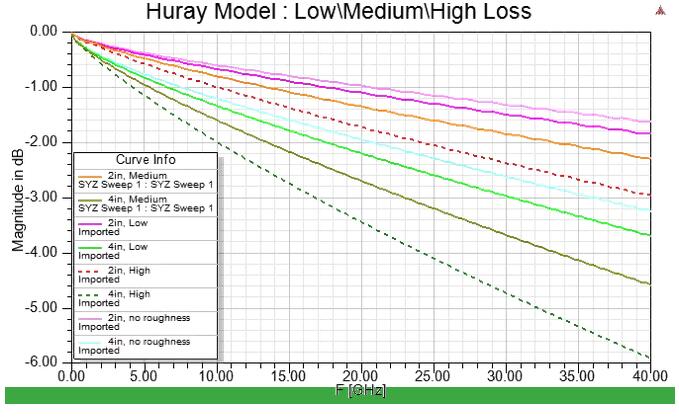
1.2 50 ohm microstrip line, 2 and 4 inch length, trace width 9.9mils, Dk=3.7, Df=0.004
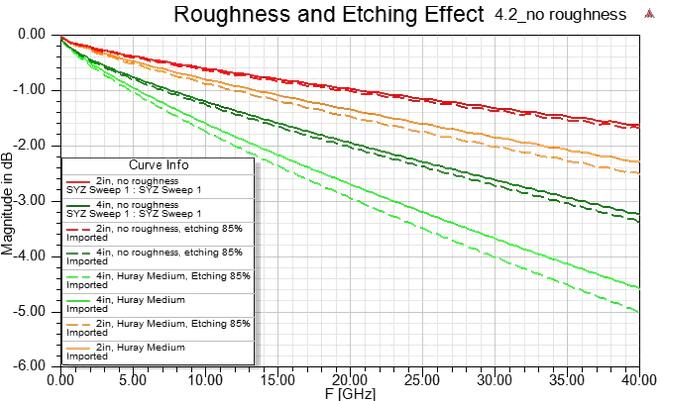
Bottom side of top layer, Huray roughness model with low\medium\high lossin SIwave
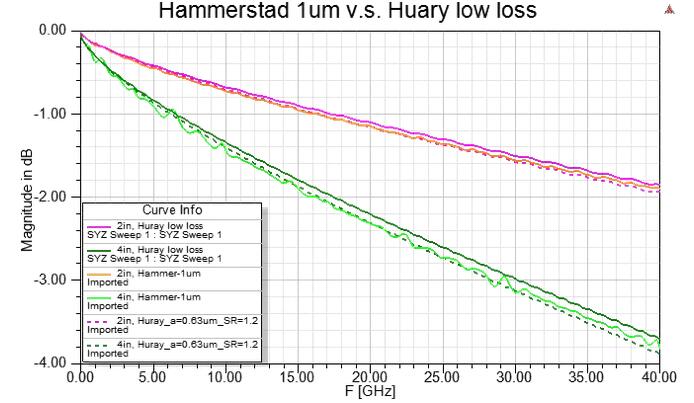
Bottom side of top layer, Hammerstad roughness model (RMS=1um, means lowroughness surface).
Bottom side of top layer, Huray roughness model (Nodule Radius=0.63um,Huray Surface Ratio (SR)=1.2)
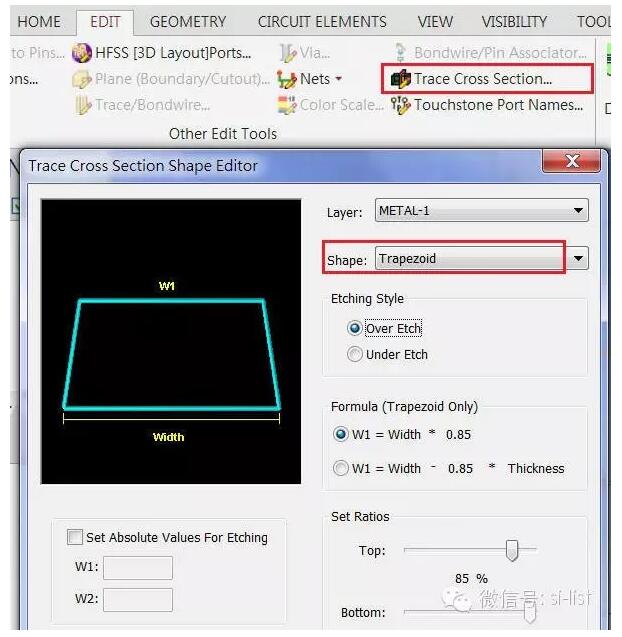
1.3 Etching effect (run with SIwave2016)
2.Roughness model in HFSS
2.1 在HFSS内,有两个方法可以引入surface roughness
一是[Finite Conductivity] boundary condition, FCBC,这方法最常用
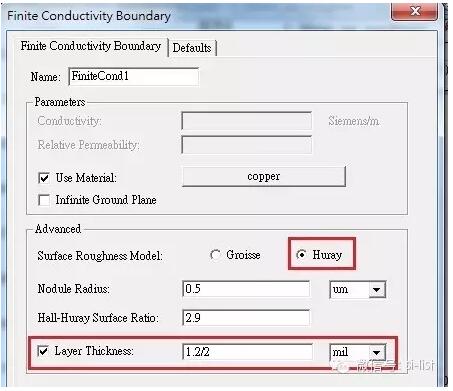
以下是HFSS HELP内对于FCBC的说明:
The surfaces of any objects defined to be non-perfect conductors are automatically setto finite conductivity boundaries. ... The finite conductivity boundarycondition is valid only if the conductor being modeled is a good conductor,that is, if the conductor's thickness is much larger than the skin depth in thegiven frequency range.
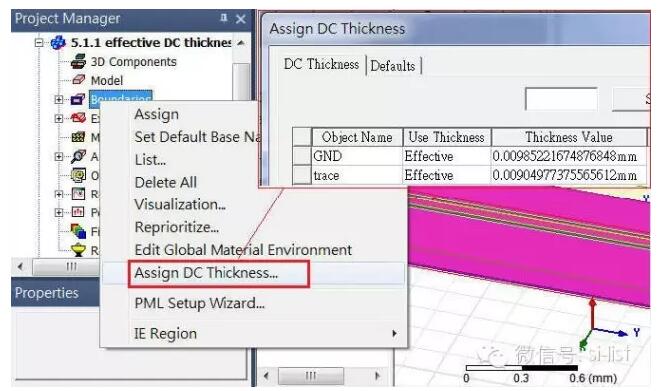
对于良导体,HFSS默认不solver inside,并自动套用[Finite Conductivity]来求解,且[Finite Conductivity]仅适用于趋肤效应成立的条件下;在DC则以[Effective DC thickness] SBC求解。
使用[Finite Conductivity] boundary withroughness必须注意:
Effective DC thickness BC is an inner boundary that isdesigned for internal surface (as traces), and finite conductivity BC in olderversion is designed just for outer surface (as ground plane, background plane).
如果要在trace上用surface roughness,"过去"只能透过finite conductivity的outer boundary技术,此时要特别小心,因为这等于是把计算outer surface的技术用在internal surface上,对于HFSS2014(含)以前的版本,这时要把导电率或等效厚度除2。而HFSS2015以后的版本,直接un-check [Object is on outer boundary]即可。
Groisse model虽然与Hammerstad model不完全相同,但很相似,都是输入RMS (Rq)即可.
另一个是[Layered Impedance]boundary condition, LIBC
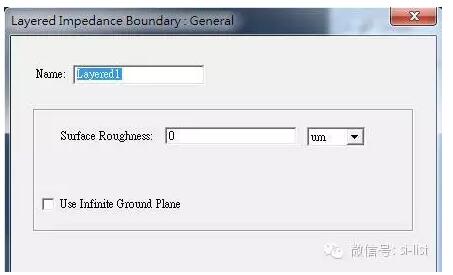
Use solidcopper for trace and GND plane, and assign effective DC thickness (this is the suggested method by default)
Use solid copper fortrace and GND plane, with solver-inside (it takes more time, but it is used to verify different BC results)
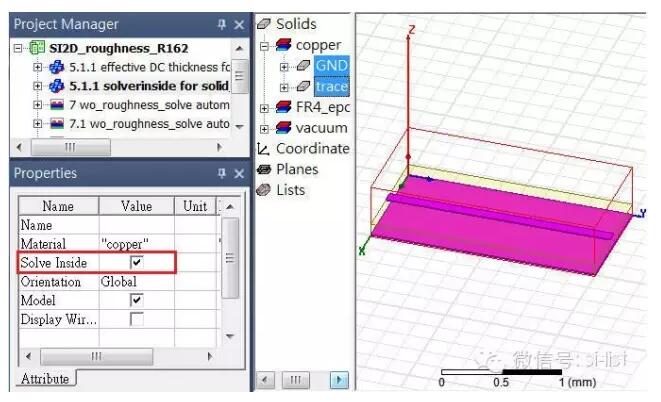
如之前的文章所示,用HFSS解很薄的导体,使用默认的effective DC thickness BC技术,可以得到跟solver inside几乎一样的结果。
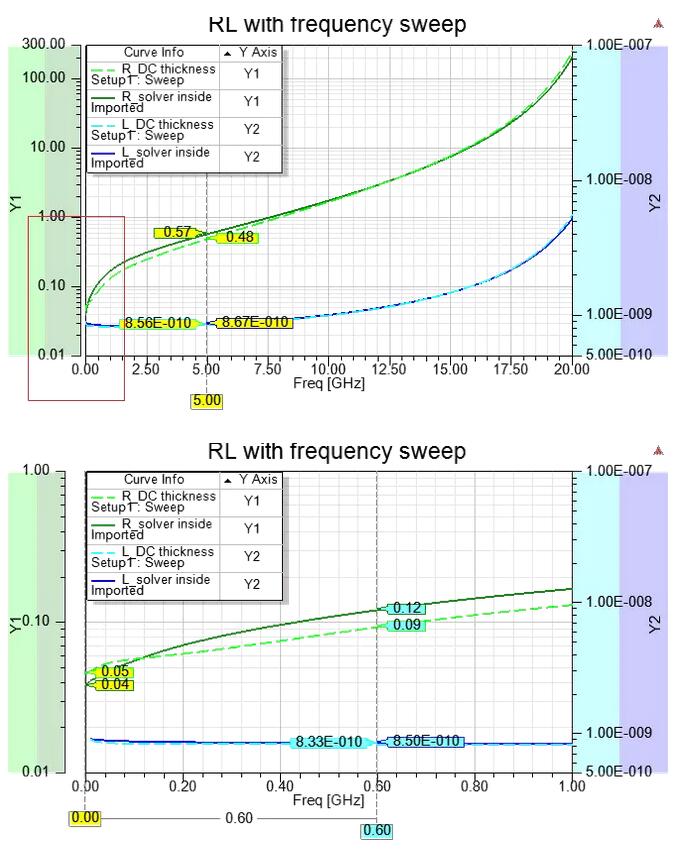
在0~5G之间,仍然可以看到R有些微差异,有机会让两条线更贴近吗?
可以
以上图来说RDC是solver inside解出的0.04较准,R5G则是以DC thickness解出的0.48较准
Use sheet copperfor trace and GND plane, with FCBC but no roughness (both of trace and planeuse inner surface)
Use sheet copper for trace and GND plane, with FCBC but no roughness (trace useinner surface, plane use outer surface)
HFSS2015在Finite Conductivity Boundary设定窗口多了一项[Object is onouter boundary],透过此项设定可以将FCBC指定成inner boundary或outer boundary。
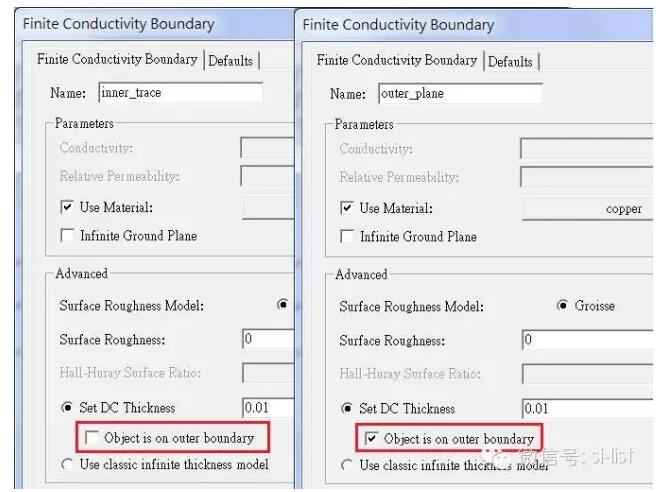
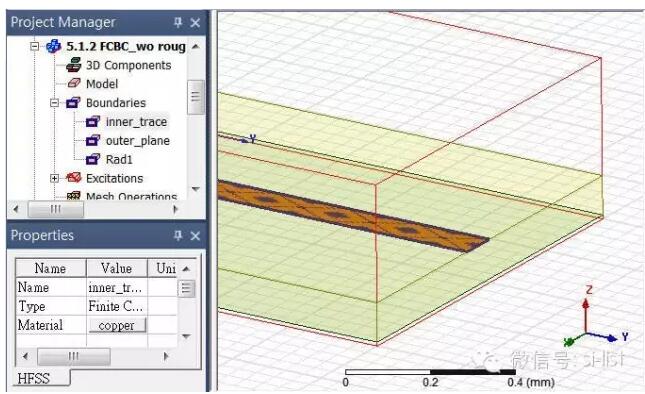
测试的结果发现设inner or outer boundary只影响低频结果(~200MHz),且其解出的整体R值大于solver inside解出的值,原因是HFSS2015(含)以前的FCBC,只有one sided BC (i.e. inner\outer BC),其必须贴于3D导体的表面上使用(不能单独使用) 。正确的做法应该是如下节所示,将inner or outerboundary用于3D object的surface。
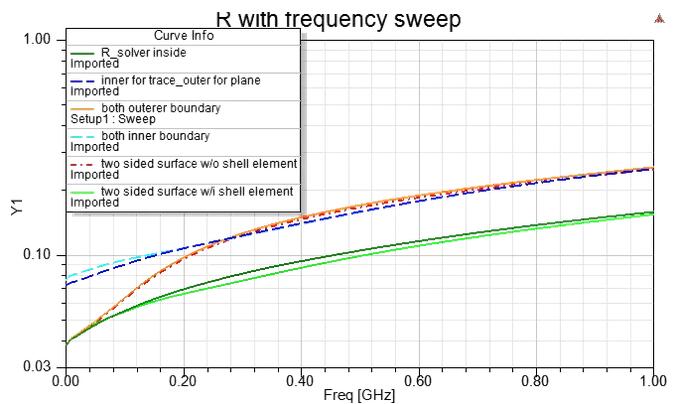
如果要将FCBC用于2D sheet,那就要使用HFSS2016新的two sided FCBC with shell element。

Use solid copperfor trace and GND plane, with FCBC but no roughness(inner surface for trace, outer surface for plane)
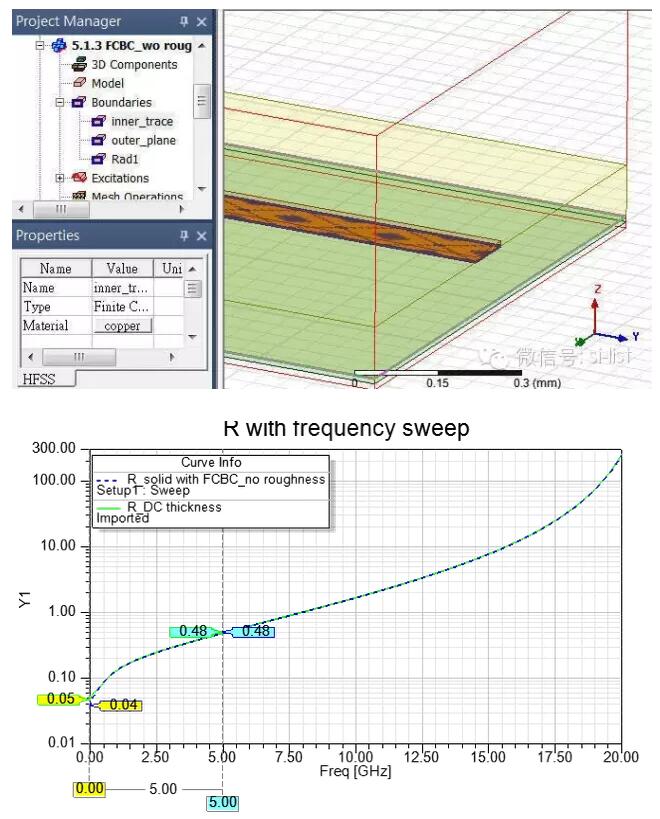
现在我们可以确认导体的某个面上加无粗糙的FCBC,可以得到上面effective DC thickness一样的结果,这样才能接着进行下一步骤
如果导体不只有一个面设定FCBC,比方上下面都指定FCBC(因为上下面要指定不同程度的粗糙),此时FCBC内的DC thickness还是都设导体厚度即可
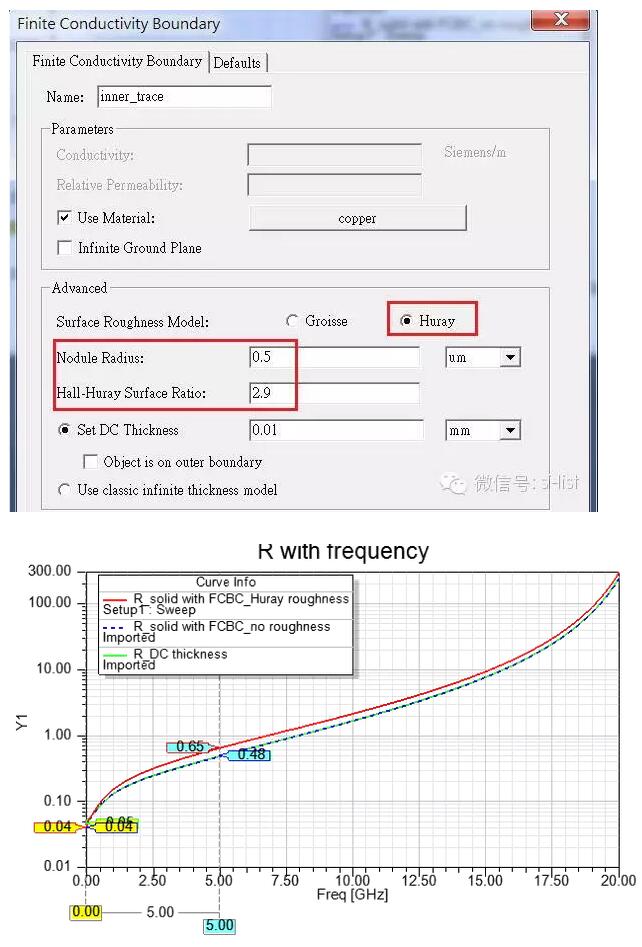
Use solid copperfor trace and GND plane, with FCBC and Hurayroughness
如果想用HFSS做较长的传输线仿真,为避免因mesh量不足而导致的模拟结果错误,请用以下方法:
-- HFSS wave port + de-embedded
-- HFSS 3D Layout (new function available from 2014)
下一节我们介绍仿真与测试的比对....
-----本节完----
关于SI-list【中国】微信群
本群专注于:高速链路设计,信号完整性,电源完整性仿真,测试,验证相关技术交流,经验分享,解疑答惑,如方便,可把单位,研究方向在群名称表示出,方便大家交流合作,如果消息太多设置为免打扰模式,不便的可退群。

注明加SI-list【中国】微信群.
学习了
小编 这个文章我在 台湾工程师博客网站 网际星空 看过 几乎完全一样 你是否应该注明转载?
学习了学习了学习了