
how to measure vswr
HOW TO MEASURE VSWR , FIRST WE ARE SETTING MAXIMUM AMPLITUDE IN CRO THEN WE PLUG COAXIAL CABLE TO THE VSWR METER? HOW TO FIND VSWR MEASUREMENT
ITS ANNA UNIVERSITY SYLLABUS FOR FINAL YR ECE STUDENTS CAN ANYONE EXPLAIN HOW TO set GAIN CONTROL NOB AND dB NOB , etc., and how to predict vswr.
thanking you
venkatesh
Hmmmm. Sounds like you do not understand what VSWR actually is. It sounds like you have one of those old style SWR meters.
VSWR is Voltage Standing Wave Ratio. To actually see a VSWR you need four things:
1) an RF signal source
2) a coaxial cable with some sort of mechanism to allow access to the center conductor at various lengths
3) a load impedance for the other end of the coaxial cable
4) some sort of meter to measure the total RF voltage as some sort of probe various points along the coaxial cable
So you set your signal source to a fixed frequency, and tune it up for a good output voltage.
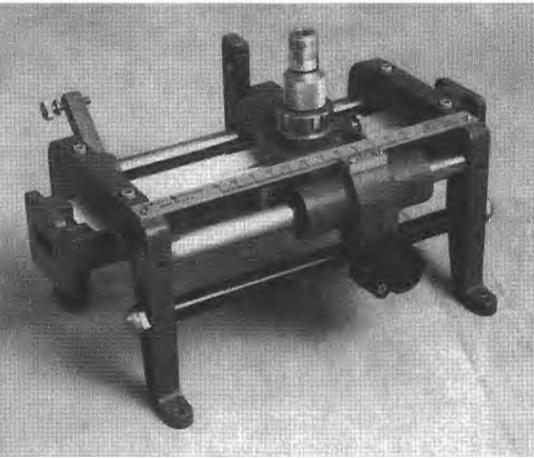
In the olden days, your "leaky" coaxial line would involve something called a "slotted line". It is a length of coaxial line that had a long slot cut in the ground plane of the coax, along its length. An electric field probe would be inserted into the slot, and the probe position along the slot could be varied precisely.
Assuming your coaxial line was 50 ohm, you would hook a mismatch to the other end, like a 25 ohm load. This insured that power coming from your source would hit the load (forward wave), and since it is impedance mismatched some of that power would reflect off of the load (reverse wave). Now, at any position that you set the EField probe, the overall voltage measured would be a linear superposition of the forward and travelling waves. At some positions their phases would be the same, and you would have an EField maximum there. At other positions you would have the forward and travelling waves be 180 degrees out of phase, and you would have an Efield minimum there. By recordeing the Min and Max Efield, you could get the ratio of the two.
This is where the SWR meter comes into use. The efield probe was typically connected directly to a RF Diode detector. The Diode detector turned the RF energy into a detected DC voltage. So typically you would have a slotted coaxial like, a diode detector mounted on the moveable portion of the slotted line, and a BNC cable running from the diode detector to the SWR meter. The SWR meter was reading DC volts, NOT RF energy.
Does this sound like the setup that you have? If it is, I will write some more on how to use it.
More recently, VWSR had been measured using two directional couplers and two RF Power meters. This is a simpler measurement scheme, but it only measures forward and reverse power independently, it does not give any indication WHERE a max or min efield is along the line, so you can not measure the phase information of your load.
And of course today we would simply use a network analyzer to do all this. But it is useful for a student to really learn how it used to be done in the old days--you really have to understand transmission line theory and smith charts to get the experiment done.
yes its the type of meter we r using...pls continue
its best to not use a vswr meter
but to work out the geomerty of the antenna
and measure its mean node distance
and use a standing wave meter
or a traveling wave tube via a rf sniffer/meter
swr isnt a good mean to test any antenna
and is only really usefull is a perfect enviroment
tuning antanns is a matter of square mean distance from a known measured antenna to trim it
do it .5mm at a time on both planes
or you will chase your tail in antenna design
vswr is a small measure a bit like voltage is in the grand scale of a circuit
and for a 'lab experiment' is pretty useless
too measure vswr
you tune the meter to max scale for foward power scaler max
then switch to reflected
max/min ratio of 1.1 or more is 50.50
or 50% loss line
so the meter should fall bellow 1.5 - 1
1.5 foward cycles to 1 refected for 75% efficient transfer - isimus
1-1.5 is also known as the golden circle ratio of the sun
as helium is 1.5% less efficient as hydrogen
so the sun is also a dipole .. 1.5/E = C
Hi venkatesh kumar,
In what frequency range are you doing the measurement. Is this the instrument that you are using to measure SWR ?
CAn you please help me implementing VSWR test in matlab...?
- How do I know if a spectrum analyzer is enough to measure an specficic DAC?
- Using ADS2019, How to set and measure tempature values for LNA?
- H field measurements with waveguide twist
- How can I measure the Side-Band Amplitude?
- Keysight PNA Harmonics measurements
- frequency shift between simulation and measurements